TWO SISTERS, ONE DIAGNOSIS:
Meet Candice and Caroline
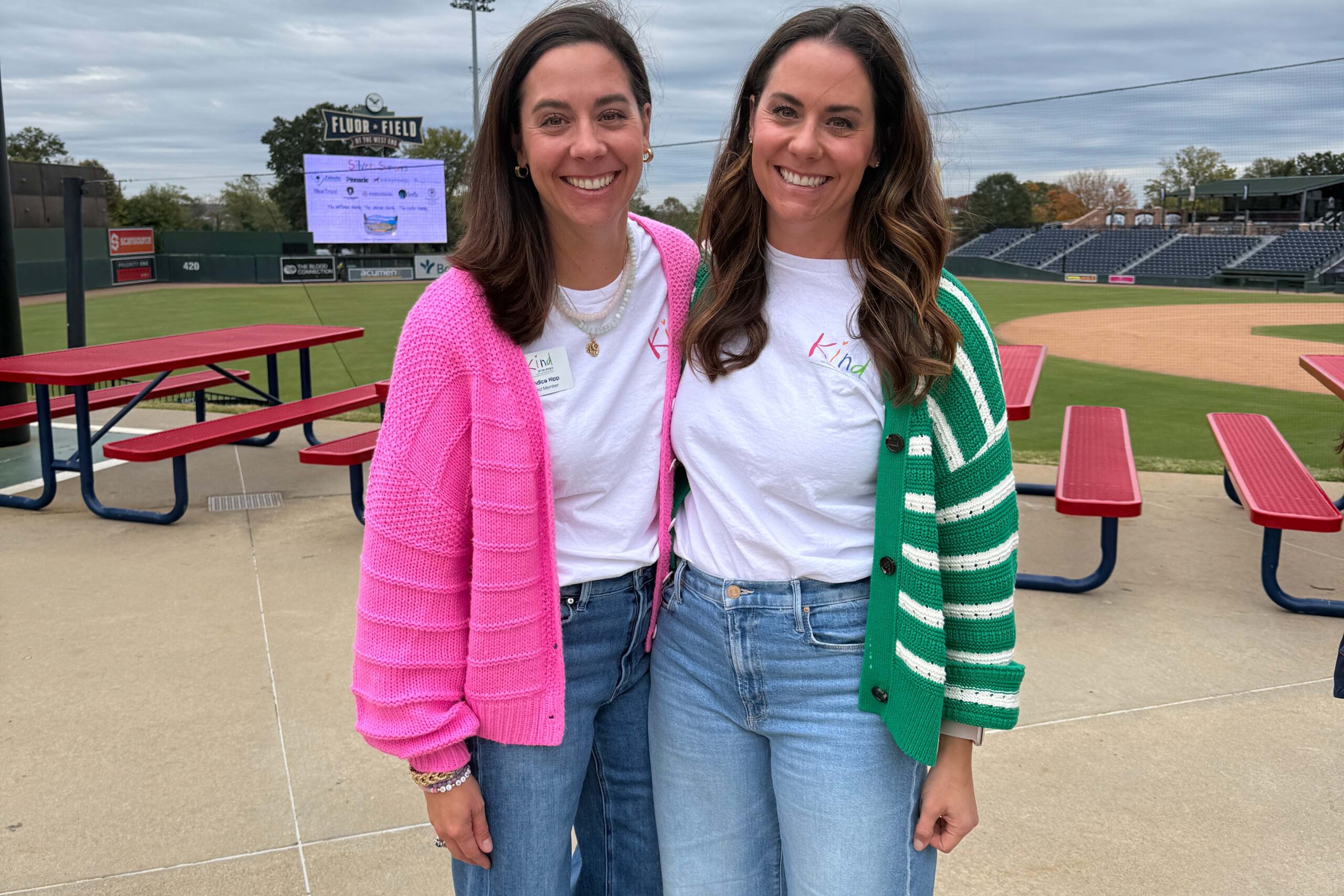
We are Caroline Giguere and Candice Hipp. We are identical twin sisters, live in Greenville, South Carolina, and somehow life has brought us right back to where we started: side by side.
Today, we live across the street from one another and get to raise our families together on the same street.
And at 37 years old, we were both diagnosed with dyslexia.
For most of our lives, we knew certain things were harder for us. Reading took longer. Spelling was difficult. Pronouncing unfamiliar words could stop us in our tracks. Reading comprehension often required more time and effort.
We remember being pulled out of class for extra reading help in third grade and feeling embarrassed because we didn’t understand why something that seemed to come so easily to others felt so hard for us.
Our parents knew we needed extra support, and they went above and beyond to make sure we had it. Growing up, they provided us with tutors and extra help with reading, math, the SATs and more.
But even with all that support, none of us understood why we struggled with certain things.
We hated reading aloud in class. We were terrified we would read too slowly, stumble over a word or not be able to pronounce something correctly.
We hated being called on to answer questions because sometimes our brains simply hadn’t had enough time to process everything we had just heard and formulate an answer.
But we also knew we were capable.
So we adapted.
Looking back now, we believe we became very good at masking our learning difficulties. We overcompensated. We worked harder. We found ways around the things that were difficult for us and pushed ourselves to keep up and make good grades.
Our dyslexia is mild, which made it even easier for our struggles to stay hidden.
And for the most part, we figured out how to perform well academically.
Except the SATs. We could barely break 1,000.
And we have absolutely no shame sharing that now. Our parents knew those test scores did not reflect what we were capable of and advocated for us with college admissions, reminding them that a test score did not define our ability to succeed.
And they were right.
We went to college and attended graduate programs. We got married, started successful careers and eventually became mothers.
Caroline became a cardiac device specialist and ran a pacemaker clinic for Carolina Cardiology for a number of years before transitioning to part time work with Abbott in its Cardiac Rhythm Management division. She later pivoted to cofound KIND of the Upstate, a nonprofit focused on disability awareness, kindness and inclusion.
Candice earned her master’s degree in healthcare administration and worked in healthcare for more than 10 years, focusing on community programs that provided access to care and care coordination for low income populations.
We had found ways to succeed and accomplish so much, but neither of us knew that the two little girls who had struggled with reading all those years ago had dyslexia.
It took 37 years and an unexpected journey with one of our own children for us to finally understand.
Caroline brought her youngest son, Gray, to Lauren Batson, Ph.D., at Greenville Assessment and Learning Specialists because she wanted to better understand how he was learning.
As Lauren went through the results of Gray’s evaluation and explained dyslexia and the signs associated with it, Caroline started recognizing herself in so much of what Lauren was describing.
She left Gray’s results appointment, got in the car and immediately called Candice:
“Candice, I think we have dyslexia.”
Because that’s the thing about being identical twins. The struggles Caroline was recognizing weren’t hers alone. Candice had struggled with the exact same things growing up.
Caroline told Candice, “I’m going to get tested for us.”
But it wasn’t really just for the two of us.
It was for our children too.
If there was a learning difference that we had unknowingly carried our entire lives, we wanted to understand what that could mean for them and be better equipped to recognize and support their needs.
And in a way, it was for our parents too.
They had spent so many years trying to give us every tool possible to succeed. They knew we needed extra support, but none of us had the language then to explain why.
We wanted an answer for all of us.
So Caroline asked Lauren if she could evaluate her too.
Lauren said yes and shared how much she appreciated Caroline’s willingness to be vulnerable and learn more about herself.
Caroline went back and spent about four hours completing a comprehensive evaluation and a variety of assessments with Lauren.
And at 37 years old, there was finally an explanation for so many experiences our entire family had spent years trying to understand.
Dyslexia.
And as strange as it may sound, there was so much relief in finally having a name for something we had experienced our entire lives.
A diagnosis didn’t change who we were. It changed how we understood ourselves.
Looking back, we wish those two little girls sitting in their classrooms had known that struggling with reading, spelling, comprehension, pronunciation or processing information had nothing to do with how smart or capable they were.
They simply learned differently.
And now, as mothers raising our children across the street from one another, having that knowledge feels even more powerful.
Understanding ourselves better gives us the opportunity to better understand our own children, recognize when they may need support and advocate for the way they learn.
That’s why we wanted to share our story.
Maybe you’re a parent trying to understand how your child learns.
Maybe you’re an adult who has spent years wondering why certain things have always felt harder, despite everything you’ve accomplished.
Or maybe our story helps you better understand someone you love.
We hope our story reminds you that it is never too late to understand how you learn.
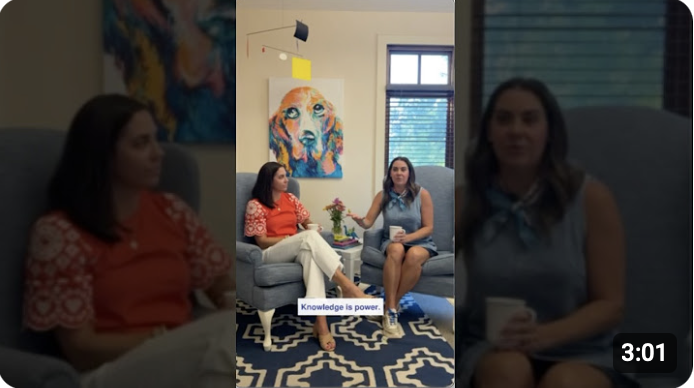
Knowledge gives you power. The power to understand yourself, advocate for yourself and recognize that there is more than one way for a brain to learn.
At 37, we finally understand ours.
Caroline Giguere & Candice Hipp
Helpful websites:
- www.ldonline.org
- www.understood.org
- www.childmind.org
- www.additudemag.com
- www.interdys.org
- www.dyslexia.yale.edu
Local resources for family support:
- KIND of the Upstate
- Masterpiece Collective
- The Roo Crew (Spartanburg)
For assessments:
- Greenville Assessment and Learning Specialists
- Greenville Child Psychology
- Palmetto Psychological Associates
- Vive
- Greenville Learning Collective (accepts some insurances and Medicaid)
- Greenville County Schools (not diagnostic- for purposes of determining special education eligibility)
Schools specializing in teaching students with Dyslexia:
- The Chandler School
- Camperdown Academy
- Lakes and Bridges Charter School (Easley)
Tutoring:
- Many individuals are trained in the community as do learning specialists at many local private schools
- Augustine Literacy Project offers low cost/free tutoring for lower income
- Designed with a Purpose Tutoring
- Pearl Center for Learning
- Community Brain Lab
Recent Comments